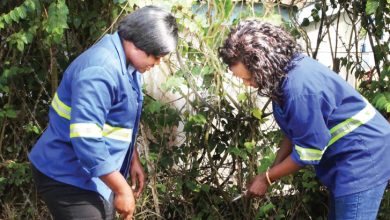
In the rolling farmlands of Traditional Authority Kabudula in Lilongwe, a quiet revolution is unfolding.
Here, rural women, once trapped in subsistence farming and exploitative markets, are now producing hundreds of metric tonnes of crops, negotiating directly with major processors, and reshaping their economic futures.
At the heart of this transformation is the Kabudula Rural Women Cooperative, powered by the Youth Entrepreneurship for the Future of Food and Agriculture (Yeffa) Programme and led by women who have learned not just how to farm better, but how to farm with purpose.
“In the past, we used to farm without following any techniques,” says Kabudula Rural Women Cooperative chairperson Sarah Kachedwa. “Now, we harvest more from even small pieces of land. This project has truly changed our lives and our cooperative.”
Kachedwa’s words capture a journey that began in uncertainty. When the cooperative first registered, enthusiasm quickly waned. Members struggled to understand the concept of shareholding, yields were low, and confidence in collective action was fragile. Many women quietly walked away.

The Yeffa programme marked a turning point. Implemented by the Farmers Union of Malawi (FUM) with support from Agra and the MasterCard Foundation, Yeffa introduced structured training in Good Agricultural Practices (GAP), climate-resilient farming and cooperative governance.
The programme helped women understand that buying shares was not a burden, but an investment in ownership, stability and growth.
“Through the Yeffa project, we received training that helped everyone understand the value of investing in our own future,” Sarah explains. “Today, those same shares are what keep us strong and united.”
That unity is now translating into remarkable productivity.
In a country where climate shocks have upended traditional farming calendars, Kabudula’s women have learned to farm smarter using improved techniques, planning for markets and aggregating produce strategically.
The results are staggering. In the 2023–2024 season, the cooperative produced just 4 metric tons of soybeans, 6 of maize and 2 of sunflower. This season alone, it has already sold 104 MT of soya beans and expects to reach 400 MT of soya beans, 500 MT of maize and 25 MT of sunflower by season’s end—a tenfold leap in output.
“We used to farm blindly,” Sarah says. “Now, we farm with knowledge, with intention, and with the market in mind. That has changed everything.”
Markets, once distant and unforgiving, are now within reach.
In March 2025, the cooperative participated in a Yeffa-supported Trade Facilitation Platform in Dowa, an event designed to connect farmer organisations directly with buyers and input suppliers.
For Kabudula’s women, it was the first time many had sat across the table from serious buyers, without middlemen dictating prices.
The impact was immediate and personal. Where vendors once paid as little as K1700 per kilogramme kg of soya beans, a cooperative member recently sold 14 bags at K2 140 per kg through AVC, a buyer introduced through the platform. Her earnings exceeded K1 million—a life-changing sum in rural Malawi.
“These are the kinds of opportunities we never had before,” Sarah says. “Now, women can pay school fees, invest in farming, and support their families with dignity.”
The platform also elevated Kabudula onto the national agricultural stage. Representing the cooperative, Kachedwa held meetings with Sunseed Oil Company Limited, one of Malawi’s largest soya beans processors. The outcome was a commitment for Kabudula to supply 400 metric tons of soybeans and 550 metric tons of maize.
For a cooperative made up entirely of rural women, the deal signalled more than market access, it signalled legitimacy.
This success is the result of a deliberate ecosystem of support.
Yeffa’s model goes beyond training, combining access to inputs, aggregation support, cooperative strengthening, and direct buyer linkages.
In Kabudula, that approach has transformed a struggling farmers’ group into a cooperative of 240 women, including 125 young women, positioning it as a blueprint for inclusive, market-led agriculture.
“This programme has made our cooperative sustainable,” Sarah emphasizes. “We are collecting more produce, meeting market target, and helping members lift their households out of poverty. This is real empowerment.”
Challenges remain. High transport costs, limited warehouse space, and the absence of proper storage equipment, such as moisture testers and shelving, continue to threaten quality and constrain growth. Some members hesitate to transport produce over long distances, fearing losses they cannot afford.
Yet even these obstacles are now met with collective resolve.
“That’s why we keep encouraging members to buy shares,” Sarah explains. “We want to raise our own capital and solve these problems ourselves.”
With rising production, growing membership, and firm market commitments, the Kabudula Rural Women Cooperative is no longer simply surviving; it is planning, scaling and leading. By the time the Yeffa project concludes, Sarah believes the transformation will be irreversible.
“Our households will not be the same,” she says. “We are building a cooperative that harvests more, earns more, and empowers more women. This is how we transform our lives—and our nation.”
In Kabudula, the future of agriculture has a clear face: informed, organised, and female. Through Yeffa, rural women have not only found their voice, they have found their power. And they are using it to reshape Malawi’s agricultural economy, one harvest at a time.